The Real Difference Between Firewood and Charcoal: Taste Test Results [2026]
Hardwood for flavour and long gatherings, charcoal for a quick, hot sear, briquettes for low and slow. Our side-by-side on taste, cost, smoke and storage, with a table.
 The Stompies teamUpdated 9 min read
In this article
Every great fire starts with the right fuel.
Your choice between firewood and charcoal shapes everything – from the flavour of your boerewors to the atmosphere of your gathering.
Both charcoal and firewood release gases when burned, mixing with air and water vapour.
Their performance tells completely different stories.
Hardwoods like sekelbos, rooikrans, and kameeldoring deliver exceptional braai results.
Their density and low moisture content produce higher temperatures over longer cooking times.
Perfect for those extended outdoor gatherings where memories are made.
Charcoal reaches incredibly hot temperatures and burns consistently.
Quick to light and fast to cooking temperature, it’s become essential for time-conscious grillers.
Yet there’s a trade-off worth considering.
Wood grilling creates unique flavours that transform your food.
At Stompies, we’ve found that understanding these differences helps you make better choices for your specific cooking style.
Quick heat or slow-burning flavour?
Convenience or authentic smoky taste?
This guide explores which fuel works best for different situations, how each affects your food’s taste, and the practical considerations that might sway your decision.
Time to settle this age-old debate with our taste test results and practical insights.
When to Use Firewood, Charcoal or Both
Choosing the right fuel for your braai depends on what you’re cooking and when you’re cooking it.
Each occasion calls for different fuel to match your specific needs.
Day-Long Gatherings: Firewood for Ambience and Flavour
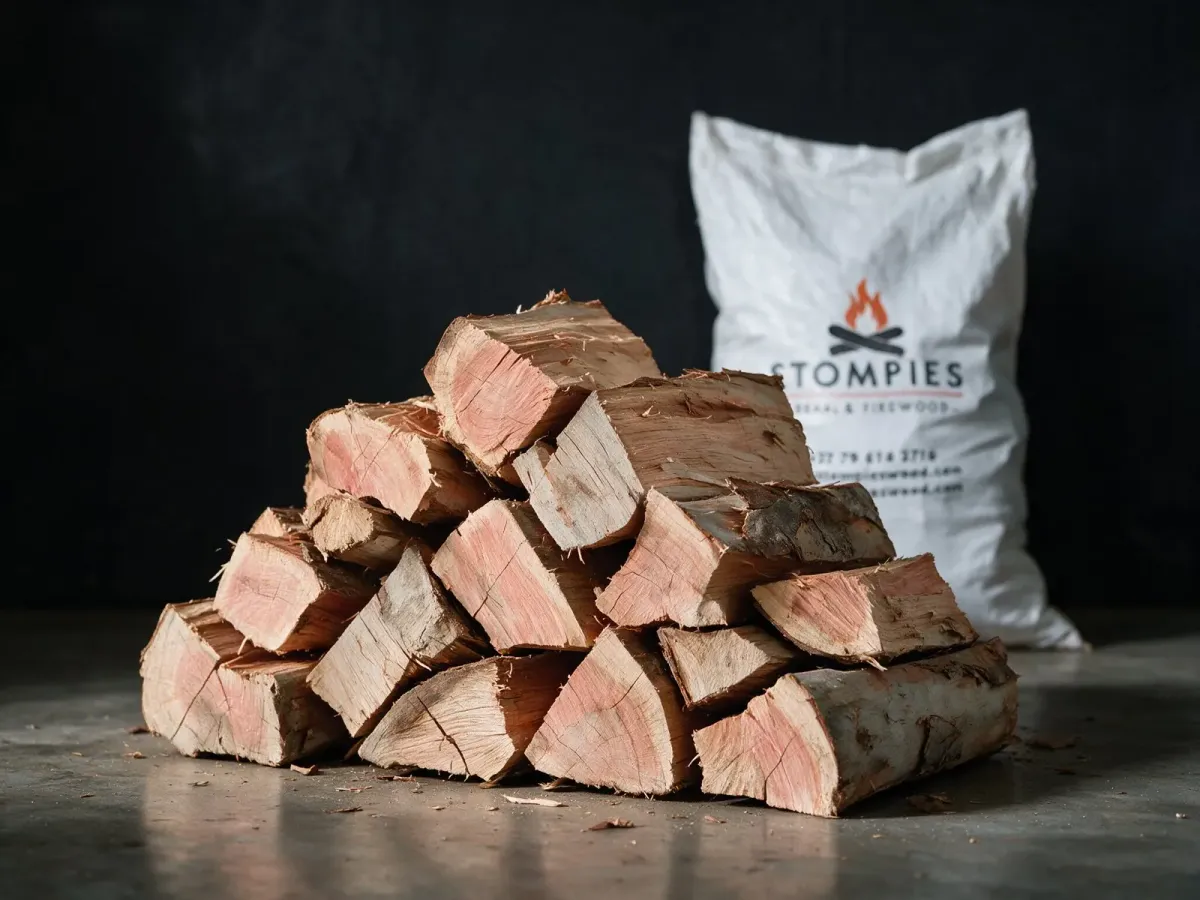
Black Wattle Firewood creates both warmth and atmosphere for extended family gatherings.
It burns for extended periods and offers excellent residual heat once it has burnt down to coal.
This wood ignites easily after seasoning for six to twelve months and leaves minimal residue after burning.
Rooikrans wood delivers exceptional results for day-long events.
It releases a pleasant scent as it burns, adding an extra dimension to your outdoor cooking experience.
Its vibrant flames set the perfect mood for any gathering, creating what South Africans lovingly call “kuierhout” – the ideal wood for social settings.
“Because let’s face it – no one’s ever said, ‘Wow, what a vibe,’ next to a bag of briquettes.”
Quick Weeknight Braais: Charcoal for Speed
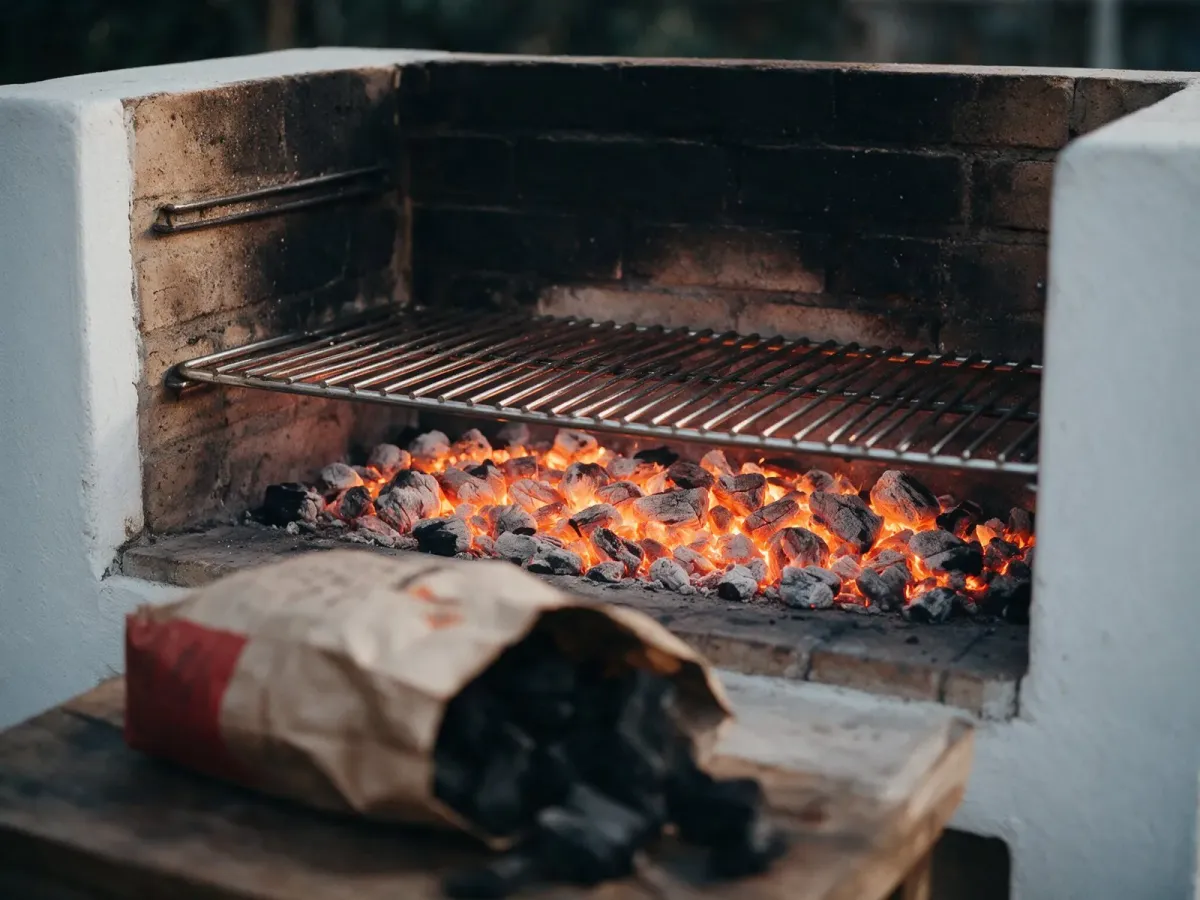
Charcoal briquettes are readily available in most shops, allowing you to start your braai and begin cooking within minutes.
Perfect for those impromptu weeknight braais.
Wood grilling requires more preparation time, including gathering the right wood and ensuring it’s properly seasoned.
Charcoal grills get hot fast and can sear meat beautifully, making them ideal for quick-cooking foods like burgers, hot dogs, and vegetables.
Perfect for that Tuesday night emergency when you forgot to defrost the chicken but still feel like being a hero over the coals.
Can You Use Wood and Charcoal Together?
You can combine wood and charcoal for the best of both worlds.
Charcoal provides extra heat, and the wood delivers unique flavour.
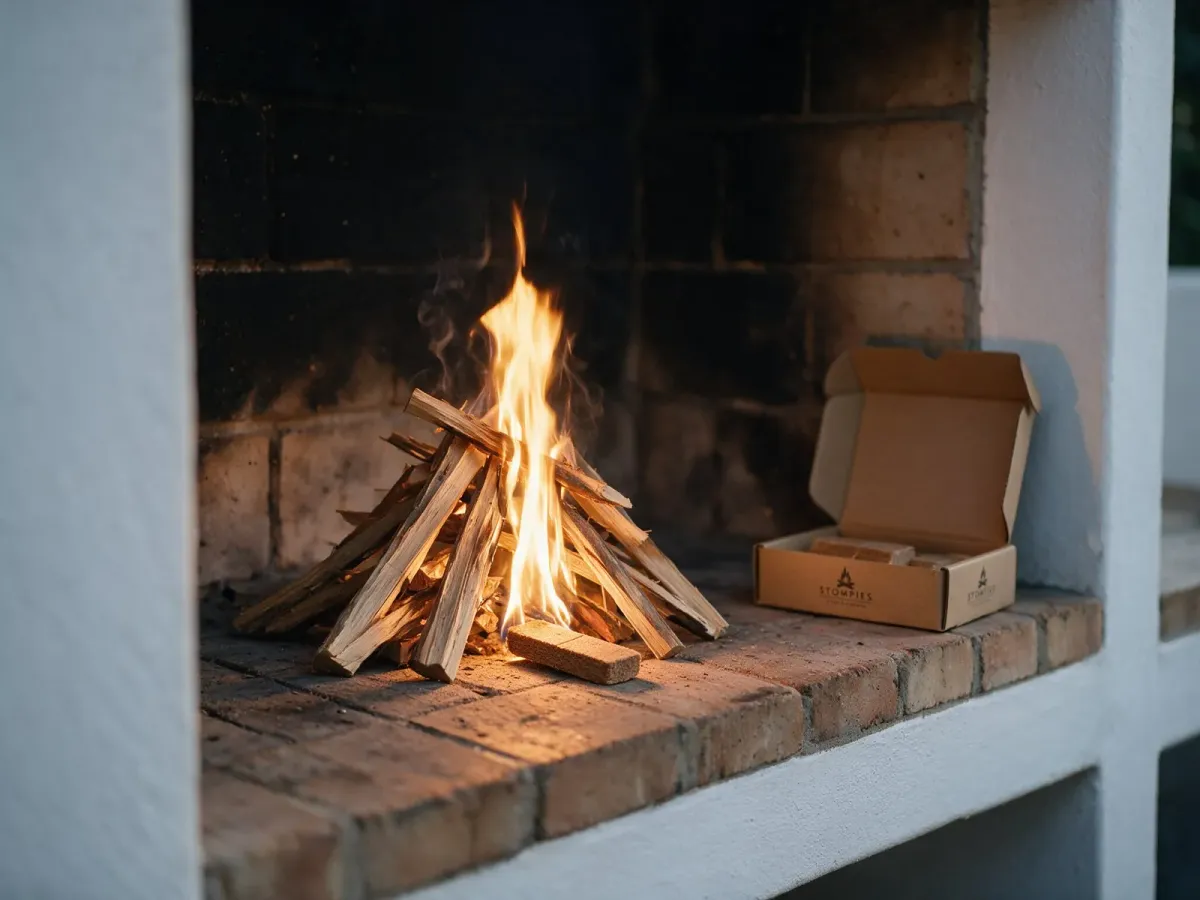
One effective method: build your fire with charcoal and reach the right temperature.
Just before adding meat to the grill, add a few pieces of wood to provide additional flavour.
Try the “half and half” approach – put charcoal on half the grill and wood on the other side.
The charcoal side will burn faster with more heat and fewer flare-ups.
It’s like a power couple – one brings the intensity, the other brings the flavour.
Low-and-Slow Cooking: Briquettes for Consistency
Briquettes offer unmatched consistency for slow-cooking methods.
Their uniform size and shape provide better temperature control and longer burn times.
Briquettes are especially suited for low-and-slow cooking where temperatures between 110°C to 135°C are ideal for up to 8 to 12 hours.
The “Snake Method” works brilliantly with briquettes for extended cooking sessions.
This involves arranging them around the edge of your grill to create a slow-burning path that maintains consistent temperature for hours.
Flavour Differences Explained by Cooking Style
The magic of a perfect braai lies in matching your fuel to your cooking technique.
Each method creates distinct flavour profiles that can make or break your outdoor feast.
Direct Heat Grilling: Charcoal Sear vs Wood Smoke
Charcoal excels at direct heat cooking.
It burns hotter than wood, creating that mouthwatering seared exterior on steaks and burgers.
Lump charcoal reaches temperatures up to 575°C, compared to briquettes which typically max out around 500°C.Wood struggles with direct heat grilling.
The flames from burning wood are difficult to control, often causing flare-ups that char your food rather than sear it properly.
Wood imparts significantly more flavour than charcoal, which offers little taste impact beyond the classic “grilled” profile.
Smoking Meats: Stompies Firewood vs Briquette Control
When it comes to flavour, Stompies hardwood logs bring the smoke that matters.
Each wood we stock has its own unique flavour profile that can take your meat from good to unforgettable:
- Black Wattle: Light and neutral – perfect if you want gentle smoke that lets the meat shine.
- Blue Gum (Bloekom): Subtle yet steady, with a mild smokiness that works well with chicken, pork, and even fish.
- Rooikrans: Rich and slightly sweet, ideal for lamb and beef with a deep, aromatic edge.
- Sekelbos: Naturally fragrant and spicy – a South African favourite for wild game, boerewors, and poultry.
- Kameeldoring: Dense, slow-burning, and bold – excellent for brisket, ribs, and long smokes where heat and flavour need to hold.
🔥 Want flavour and heat?
Stick to hardwoods.
🔁 Want perfect consistency?
Pair it with your briquette base.
Stompies wood isn’t just for braais – it’s for serious smoke.
Seafood and Veg: Delicate Flavours and Fuel Choice
Delicate foods require thoughtful fuel selection.
Fish and seafood absorb smoke rapidly, hence lighter woods prevent overwhelming their natural flavours.
Alder wood offers subtle smokiness that complements rather than dominates seafood.
Vegetables benefit from milder smoke profiles.
Fruit woods like apple and cherry add a pleasant sweetness that enhances rather than masks the natural vegetable flavours.
The Maillard reaction (caramelisation) occurs more predictably with charcoal’s steady heat, creating consistent browning on vegetables.
A few wood chunks mixed with charcoal provide the perfect balance – steady heat with just enough smoke to enhance delicate ingredients without overpowering them.
Performance and Practicality in Everyday Use
Flavour matters, but practical considerations often determine which fuel ends up in your braai cart.
Does Charcoal Burn Better Than Wood?
Charcoal delivers superior energy performance.
It contains approximately 29 MJ/kg of energy, almost double the 14-18 MJ/kg found in firewood.
This energy difference explains why charcoal reaches higher temperatures faster.
Charcoal burns hotter and cleaner than firewood, producing minimal smoke once lit.
Its higher energy density provides more heat per unit of weight, making it exceptionally efficient for high-temperature cooking.
Firewood burns at lower temperatures and produces more smoke due to its higher moisture content.
It ignites more slowly and creates more ash, yet provides long-lasting heat ideal for extended cooking sessions.
Storage Space: Logs vs Bags
Storage often influences fuel choices for regular braai enthusiasts.
Firewood demands considerably more space than equivalent charcoal.
Hardwood logs are bulky and heavy, requiring substantial storage area.
Charcoal is remarkably light and compact, occupying far less space for the same energy output.
An 8kg bag of quality charcoal takes up minimal room yet delivers substantial cooking power.
Weather Impact: Wet Wood vs Dry Charcoal
Weather conditions directly affect your braai experience.
Strong winds disperse heat more readily with charcoal, making temperature control challenging.
High humidity and rain prevent meat from browning quickly regardless of fuel type, resulting in less sear and more steam.
Charcoal’s already low moisture content gives it a distinct advantage in damp conditions.
Wet firewood performs poorly, creating excess smoke and steam rather than clean heat.
Properly dried wood (below 20% moisture) remains essential for effective burning.
Cost Comparison: Local Wood vs Premium Charcoal
Cost considerations vary by location and quality.
Generally, firewood costs less than charcoal, particularly with a reliable local supplier.
A cubic metre of firewood in Cape Town typically contains 34 bulk bags.
Premium charcoal commands higher prices – approximately R150 for a 4kg bag of quality charcoal, while wood costs from about R140 for a 15 kg bulk bag.
Health and Environmental Impact of Each Fuel
Your fuel choice affects more than just flavour.
Health and environmental considerations matter for regular braai enthusiasts who value both their families and the planet.
Charcoal Emissions: What You’re Breathing
Charcoal grilling releases pollutants that can affect air quality and health.
These emissions may contain:
- Carbon monoxide (CO) and carbon dioxide (CO2)
- Particulate matter (especially PM2.5)
- Polycyclic aromatic hydrocarbons (PAHs)
- Volatile organic compounds (VOCs)
- Nitrogen oxides (NOx) and trace metals
Briquettes release more harmful compounds than lump charcoal due to their additives.
Wood Smoke: Natural but Not Harmless
Wood smoke contains over 200 distinct organic compounds.
The biggest health threat comes from fine particulate matter (PM2.5), which penetrates deep into lungs.
Wood smoke can trigger asthma attacks, bronchitis, and heart attacks in vulnerable individuals.
Children and older adults face greater risks – children’s respiratory systems are still developing and they breathe more air per body weight than adults.
The bottom line being: do not directly inhale smoke from any source of burning.
Charcoal Burns Cleaner Than Wood
Charcoal burns cleaner than wood regarding particulate emissions.
The thermal energy yield differs substantially – charcoal offers about 28% efficiency compared to wood’s 8%.
Charcoal contains fewer moisture and volatile compounds since these were removed during carbonization.
It produces less visible smoke once properly lit, although carbon monoxide emissions remain a concern.
Choosing the Right Fuel for Your Braai Style
Your braai style should dictate your fuel choice, not the other way around.
Authentic traditional cooking relies on open flames and glowing embers.
Wood remains unmatched.
Hardwoods like Sekelbos, Black Wattle or Kameeldoring offer distinct taste profiles that charcoal simply cannot replicate.
Weeknight griller who values convenience?
Charcoal briquettes provide consistent heat without the wait.
Their uniform size ensures steady temperature control, perfect for predictable results every time.
Passionate about flavour intensity?
Lump charcoal deserves consideration.
It reaches higher temperatures quickly (up to about 760°C within 15 minutes), produces less ash, and imparts clean smokiness without chemical additives.
Social braai masters often prefer hardwood.
Dense varieties like kameeldoring, sekelbos and black wattle form excellent coals after burning.
Their longer burning time creates the perfect atmosphere for lengthy gatherings.
You know, the kind where the fire outlasts your uncle’s third retelling of that one fishing trip where “the one got away.”
Wood selection essentials:
- Dry, seasoned hardwoods that produce consistent heat
- Heavy, dense varieties that form good embers
- Avoid light woods like pine that don’t produce nice coals
Match your fuel to your food.
Lighter-flavoured woods like bloekom work well with poultry and pork, whereas a dense hardwood like kameeldoring suits beef and lamb.
Test if your fire is ready?
Hold your hand above it – if you can count to 10 without moving away, your fire is at the perfect temperature for grilling meat.
Quality fuel elevates everything.
Whether choosing premium lump charcoal or well-seasoned hardwood, the right fuel transforms both the flavour of your food and the entire braai experience.
Firewood vs Charcoal Comparison Table
Here’s the essential breakdown between firewood and charcoal performance:
| Characteristic | Firewood | Charcoal |
|---|---|---|
| Energy Content | 14-18 MJ/kg | 29 MJ/kg |
| Heat Performance | Lower temperatures, slower to ignite | Higher temperatures, faster to reach cooking heat |
| Burning Efficiency | 8% thermal efficiency | 28% thermal efficiency |
| Cooking Time | Ideal for extended cooking sessions | Quick cooking, faster heat-up time |
| Flavour Impact | Strong, distinctive smoky flavours; varies by wood type | Minimal flavour impact, classic “grilled” profile |
| Storage Requirements | Requires large storage space, bulky | Compact, requires minimal space |
| Weather Resistance | Poor performance when wet | Better performance in damp conditions |
| Cost (2026) | From about ZAR 140 for a 15 kg bulk bag | ZAR 468 for 8kg premium bag |
| Environmental Impact | 200+ organic compounds in smoke | Lower particulate emissions once lit |
| Best Used For | Day-long gatherings, traditional braais, smoking meats | Quick weeknight cooking, precise temperature control |
| Temperature Control | More difficult to control, frequent flare-ups | Consistent heat, better temperature control |
| Smoke Production | More smoke, especially when wet | Minimal smoke once properly lit |
| Ideal Cooking Methods | Slow cooking, smoking, traditional braai | Direct heat grilling, searing, quick cooking |
The numbers tell the story clearly.
Charcoal delivers nearly double the energy content and significantly better efficiency.
Firewood excels in flavour development and extended cooking sessions.
Your choice depends on what matters most for your specific braai style.
Woods in this guide
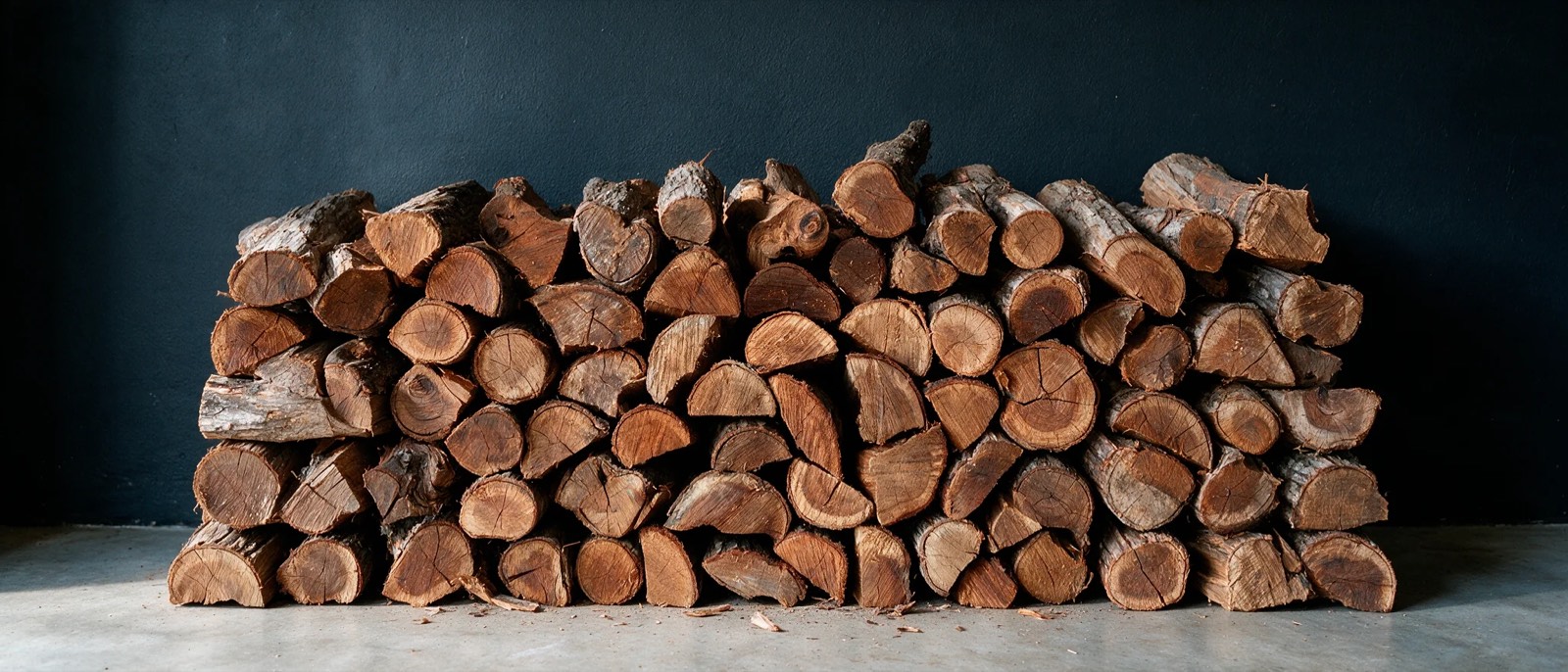
Dried, bagged and delivered by Stompies, stacked where you want it.
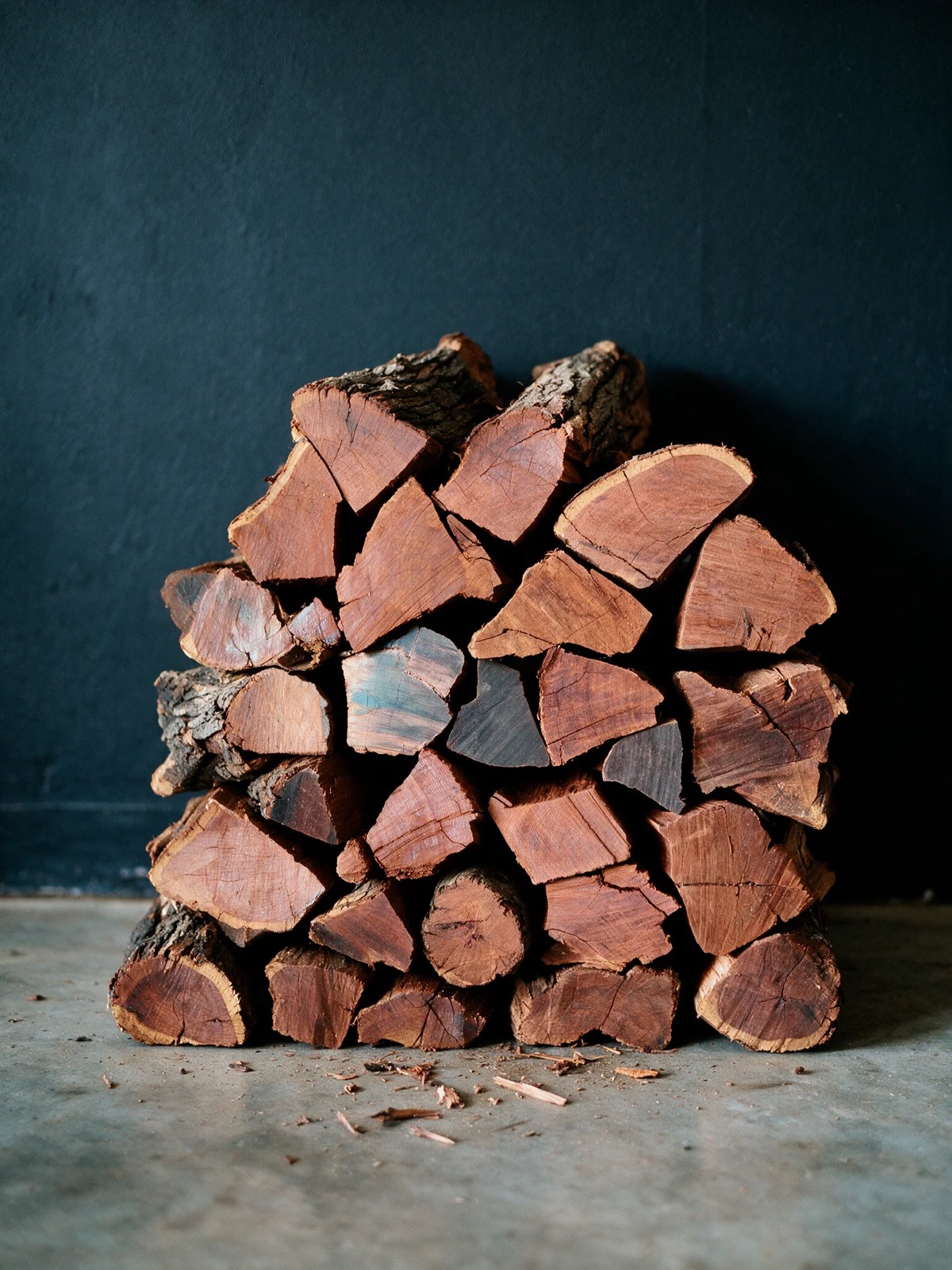
 Shop RooikransThe Cape braai wood. It takes a flame without a fight and drops into coals fast, for quick braais: chops, wors, chicken and steak.
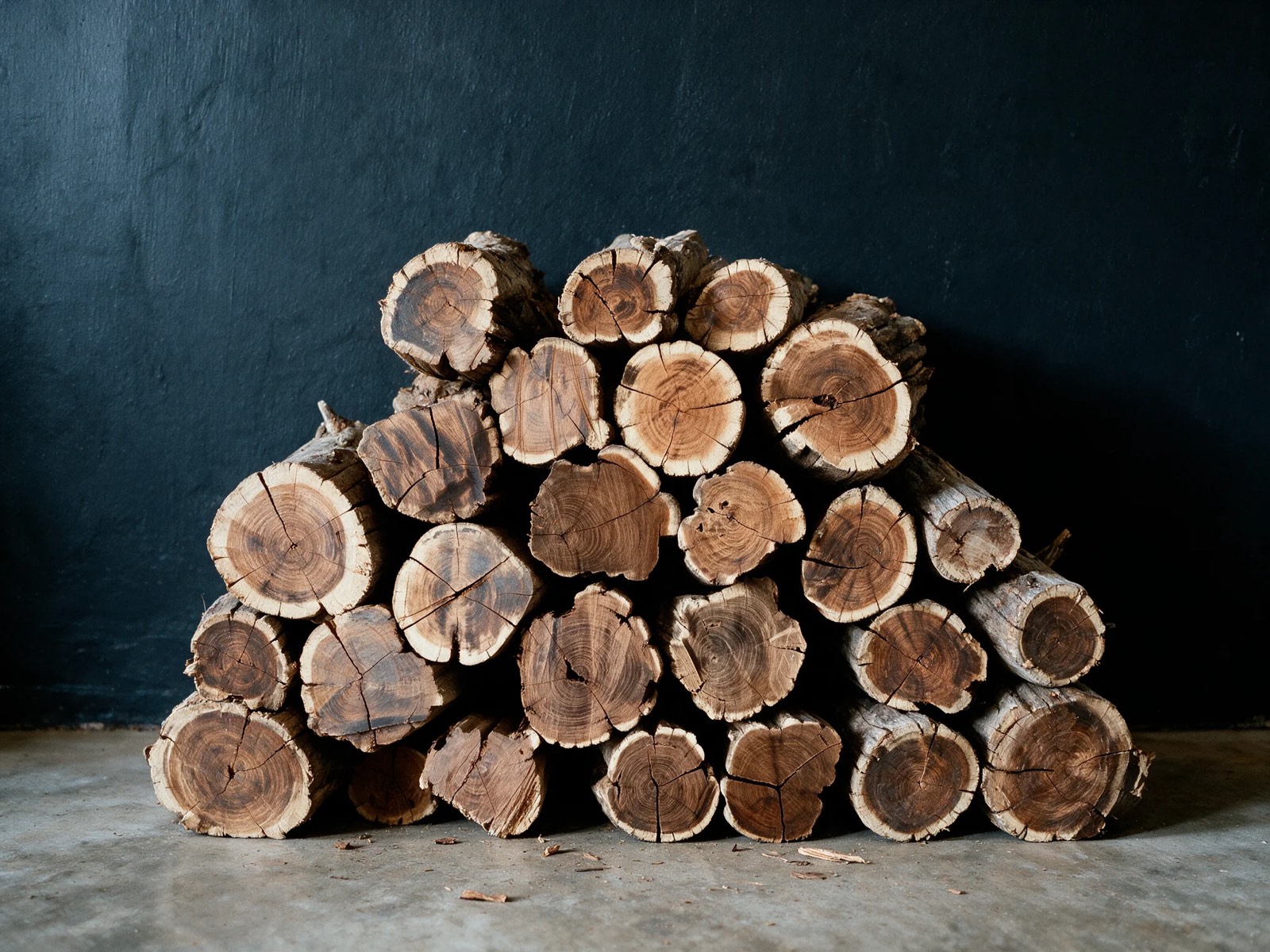
 Shop KameeldoringDense Kalahari hardwood for long, slow braais and potjie. Slow to catch, then long, steady heat and coals that keep going.
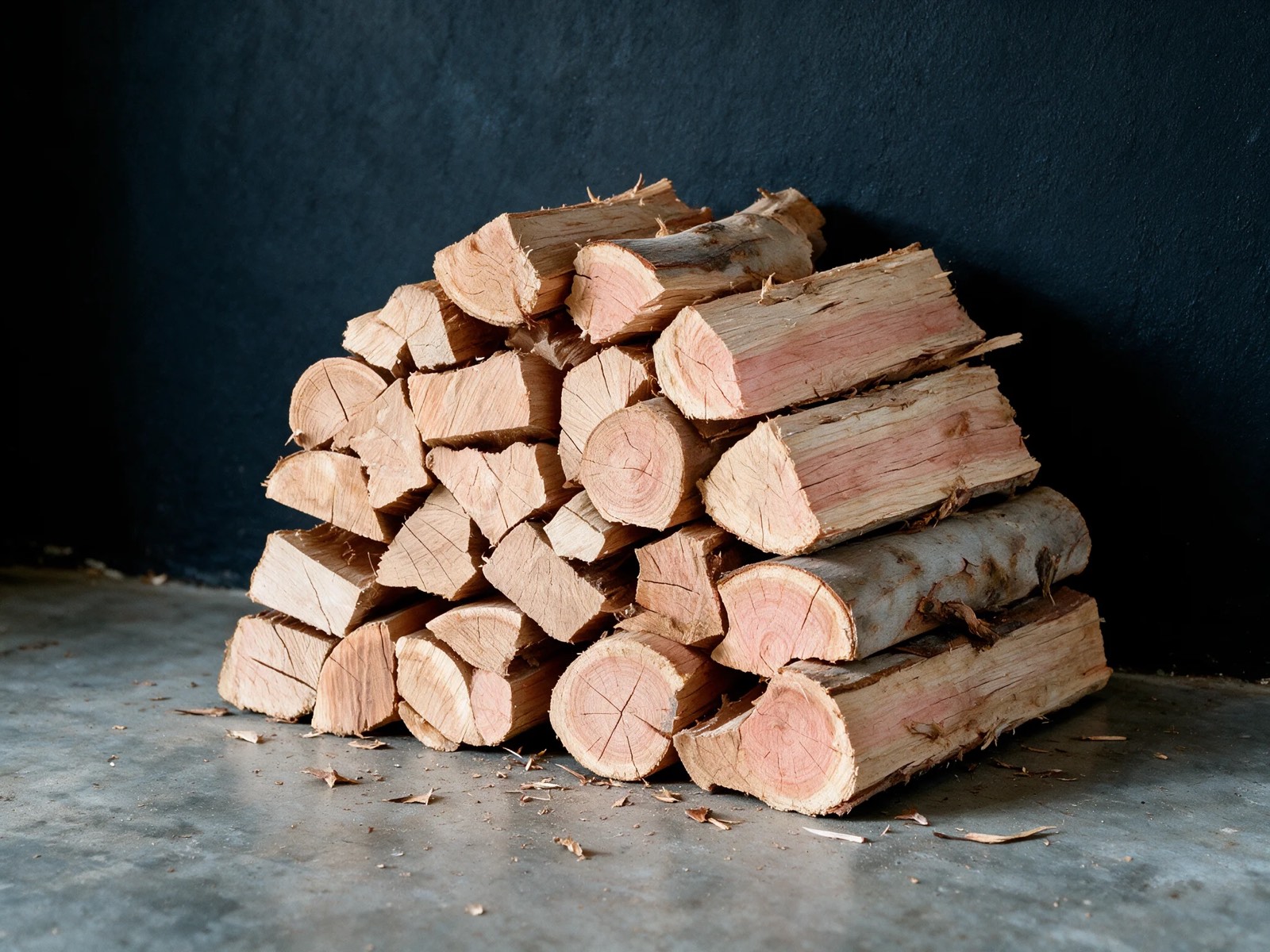
 Shop SekelbosDense Namibian hardwood for the braai. It lights readily, burns hot and makes coals that hold, for potjie, thick cuts and anything that needs steady coals.
 Shop Blue Gum (Bloekom)Our fireplace wood. It lights easily, burns hot and holds its heat between reloads, for the kaggel or closed combustion fireplace all winter.