Charcoal vs Briquettes: The Ultimate South African Braai Guide
Saturday steaks, a Sunday roast in the Weber or a potjie that simmers for hours: match the fuel to the meal and you'll never serve dry chops or half-cooked chicken again.
 The Stompies teamUpdated 5 min read
In this article
- 1What’s the Difference Between Charcoal and Briquettes?
- 2Charcoal for the Perfect Braai
- 3Briquettes for Roasts, Potjies, and Webers
- 4Charcoal vs Briquettes: A Side-by-Side Comparison
- 5When to Use Charcoal and When to Use Briquettes
- 6Quick Buying Tips for South Africans
- 7Recommendation: Which Should You Buy?
Do you know when to use briquettes and when to use charcoal?
It’s a question that divides backyards across South Africa.
One neighbour swears by the slow, steady burn of briquettes.
Another insists that only the raw heat of lump charcoal delivers the sear that makes a braai truly South African.
The truth is, both fuels have their place: but only if you understand the difference.
Get it wrong, and you end up with dry chops or half-cooked chicken.
Get it right, and you unlock the flavours, aromas, and tradition that turn a simple braai into a memory.
What’s the Difference Between Charcoal and Briquettes?
Charcoal and briquettes may look similar in a bag, but they behave very differently once lit.
Charcoal is made by slowly burning wood in low oxygen until only pure carbon remains.
It’s irregular in shape, lightweight, and burns hot and fast. Perfect for quick, high-heat cooking.
Briquettes are manufactured.
They’re made from crushed charcoal dust mixed with binders and compressed into uniform blocks.
They burn slower, steadier, and at a lower temperature than charcoal.
Here’s a simple side-by-side view:
| Feature | Charcoal (Lump) | Briquettes |
|---|
| Composition | Natural wood carbon | Charcoal dust + binders |
| Burn time | Short, burns out quickly | Long, steady burn |
| Heat output | Very hot, intense heat | Moderate, consistent heat |
| Flavour | Smoky, natural taste | Neutral, sometimes dusty if misused |
| Best for | Braaing steak, chops, boerewors | Weber roasts, potjies, Dutch oven baking |
Charcoal for the Perfect Braai
If you want flames that kiss your steak and heat that seals in flavour, charcoal is your fuel.
Charcoal burns hotter than briquettes.
That heat is what you need when braaing steak, chops, or boerewors.
The high temperature sears the outside quickly, locking in juices and creating that unmistakable smoky taste.
Charcoal is also more natural.
It comes straight from wood, without binders or fillers.
This means a cleaner burn and less chance of odd flavours clinging to your meat.
But it doesn’t last long.
A bed of charcoal can blaze fiercely, then die down in under an hour.
That’s fine for quick-cooking meat, but frustrating if you’re trying to roast chicken or slow-cook lamb.
Pros of Charcoal
- Burns very hot, perfect for searing.
- Adds a smoky, authentic braai flavour.
- Natural, no additives.
Cons of Charcoal
- Short burn time.
- Heat can be unpredictable as pieces vary in size.
Charcoal is for moments when you want speed and intensity.
It’s the fuel of choice for a Saturday steak braai, a quick boerie roll, or chops sizzling over open flames.
Briquettes for Roasts, Potjies, and Webers
Briquettes are not made for speed.
They’re made for control.
Each briquette is uniform, pressed from charcoal dust and binders.
That consistency means they burn at a steady, moderate temperature.
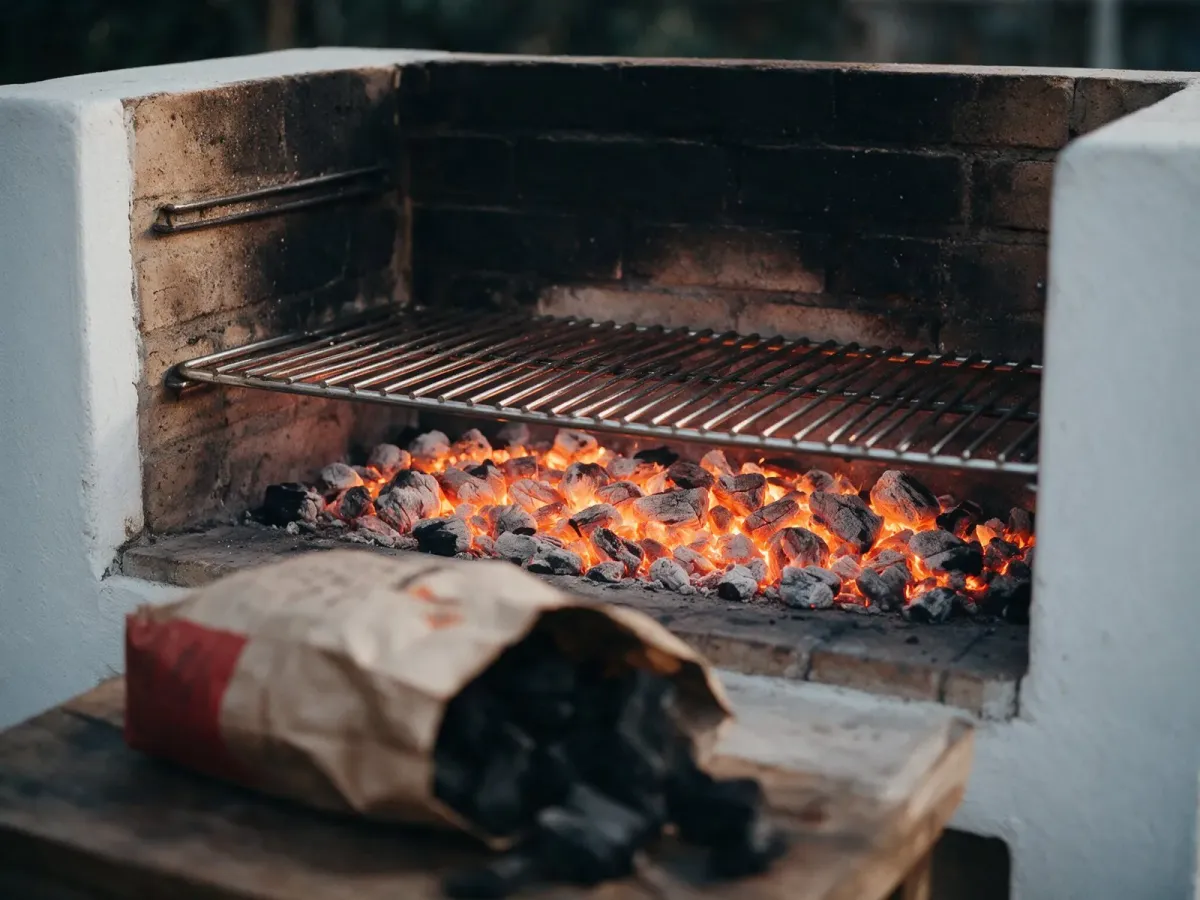
They won’t flare up like charcoal, but they’ll keep glowing for hours.
This makes them perfect for dishes that need time: whole chickens, beef roasts, or lamb shanks.
In a Weber, briquettes give you an oven-like environment.
In a potjie or Dutch oven, you can even place briquettes on the lid, cooking from above and below at the same time.
But briquettes have their limits.
On an open braai, the lower heat fails to sear properly.
Instead of a juicy chop, you risk dry meat coated in fine white ash.
That’s why South Africans often say: Never use briquettes for a braai.
Pros of Briquettes
- Long burn time, often 2–3 hours.
- Consistent, predictable heat.
- Ideal for slow roasts, potjies, and baking.
Cons of Briquettes
- Lower heat than charcoal.
- Ash can contaminate food if used on an open grill.
- Manufactured with binders, not purely natural.
Think of briquettes as the slow cooker of the braai world.
They’re not flashy, but they deliver steady heat that makes roasts tender and bread rise golden.
Charcoal vs Briquettes: A Side-by-Side Comparison
Choosing between charcoal and briquettes isn’t just about price.
It’s about matching the fuel to the meal.
If charcoal is a hot sprint, briquettes are a long-distance jog.
Each has its strength but the trick is knowing when to call on which.
Scenario 1: Saturday Steak Braai
You’ve got friends over, chops and wors ready to hit the grid.
Charcoal wins. It gets blistering hot, giving meat that dark crust and smoky flavour.
Briquettes will struggle to sear and may leave your boerie pale.
Scenario 2: Sunday Roast Chicken in the Weber
You need steady heat for over an hour.
Briquettes shine here. They burn low and slow, turning the Weber into an oven.
Charcoal would die out halfway through and leave you with half-cooked poultry.
Scenario 3: Potjie at the Campsite
The potjie needs gentle, controlled heat for hours.
Briquettes on top and underneath the pot keep things even.
Charcoal burns out too fast for this job.
Scenario 4: Quick Midweek Braai
You’re hungry, in a hurry, and don’t want to wait.
Charcoal lights faster and delivers instant heat.
Briquettes take longer to catch and settle.
Think of it like this:
- Charcoal = flavour, heat, speed.
- Briquettes = control, time, consistency.
The fuel you choose depends less on price, and more on what’s on the menu.
When to Use Charcoal and When to Use Briquettes
Getting the fuel wrong can ruin a braai.
Here’s when to reach for each bag.
Use Charcoal When:
- You’re braaing steak, chops, or boerewors.
- You want a quick, hot fire that sears meat fast.
- You’re doing a midweek braai and don’t want to wait hours.
- You’re chasing that smoky flavour that makes meat taste unmistakably braaied.
Use Briquettes When:
- You’re cooking in a Weber with the lid on.
- You’re roasting chicken, beef, or lamb.
- You’re making a potjie or baking bread in a Dutch oven.
- You need steady, even heat for two hours or more.
A Word on Mixing Them
Some people mix charcoal and briquettes for balance: charcoal gives the initial high heat, briquettes keep things glowing later.
This can work for longer braais where you want the best of both.
Local Wisdom
In South Africa, the golden rule holds true:
Charcoal for braaing. Briquettes for roasting.
Stick to that, and you’ll rarely go wrong.
Quick Buying Tips for South Africans
Not all bags of fuel are equal.
Here’s what to look for next time you’re shopping.
- Check for FSC certification. This means the charcoal comes from sustainable forests.
- Choose hardwood charcoal. It burns hotter and longer than softwood versions.
- Avoid cheap briquettes with too much filler. They produce excessive ash and weak heat.
- Keep both on hand. Charcoal for quick braais, briquettes for slow cooking.
- Store in a dry place. Damp fuel smokes, struggles to light, and kills the vibe of any braai.
A little care in what you buy goes a long way to making sure your fire delivers every time.
Recommendation: Which Should You Buy?
The answer isn’t either/or.
It’s about matching the fuel to the meal.
For a proper South African braai i.e. steak, wors, chops over open flames = buy charcoal.
For slow roasts in a Weber, potjies that bubble for hours, or bread baked under coals = buy briquettes.
If you love both styles of outdoor cooking, keep both bags in the garage.
That way, you’ll always have the right fuel on hand, whether you’re chasing flames or patience.